Cleaning up from an ice storm is a more involved process that it might seem at first. That’s not a surprise, but the extent has been larger than expected. What I didn’t expect is that ineptitude in another country would add even more complications.
I’ll start with the reasonable part. That Ego chainsaw that I was waiting on a month ago took nearly four weeks to arrive. That’s no surprise. I’m certain that the demand for chainsaws of all types spiked the day after the storm passed. The saw finally arrived last week and with other stuff going on it took a couple of days to get through the instructions, because nobody wants to accidentally sever a femoral artery. Then it took a bit of time to get over the intimidation factor of using a tool that can do something like that in a second. A nice day arrived so I put chainsaw oil in the unit and donned protective chaps and got them adjusted, then safety glasses, a hard hat with a screen and ear protectors. Then I found some smaller downed branches to start applying my new knowledge of how to cut trees. Finding a little success there, I carried on with larger branches. For years, I’ve been using a bow saw to cut off tree branches and break stuff down, and much of what I’ve learned doing that (thankfully without serious injury) works just as well with a power tool. there are two huge differences between an electric chainsaw and a gas powered one. Most notably, ear protection isn’t really required. The amount of noise it makes is minimal. Then there’s the ease of starting it. No jerking on cords and tweaking chokes to get it running. No either leaving it running while moving things around or trying to restart it each time. Push a button, squeeze the trigger, it runs. Just another reminder that powering things through an engine that has to contain powerful explosions is silly.
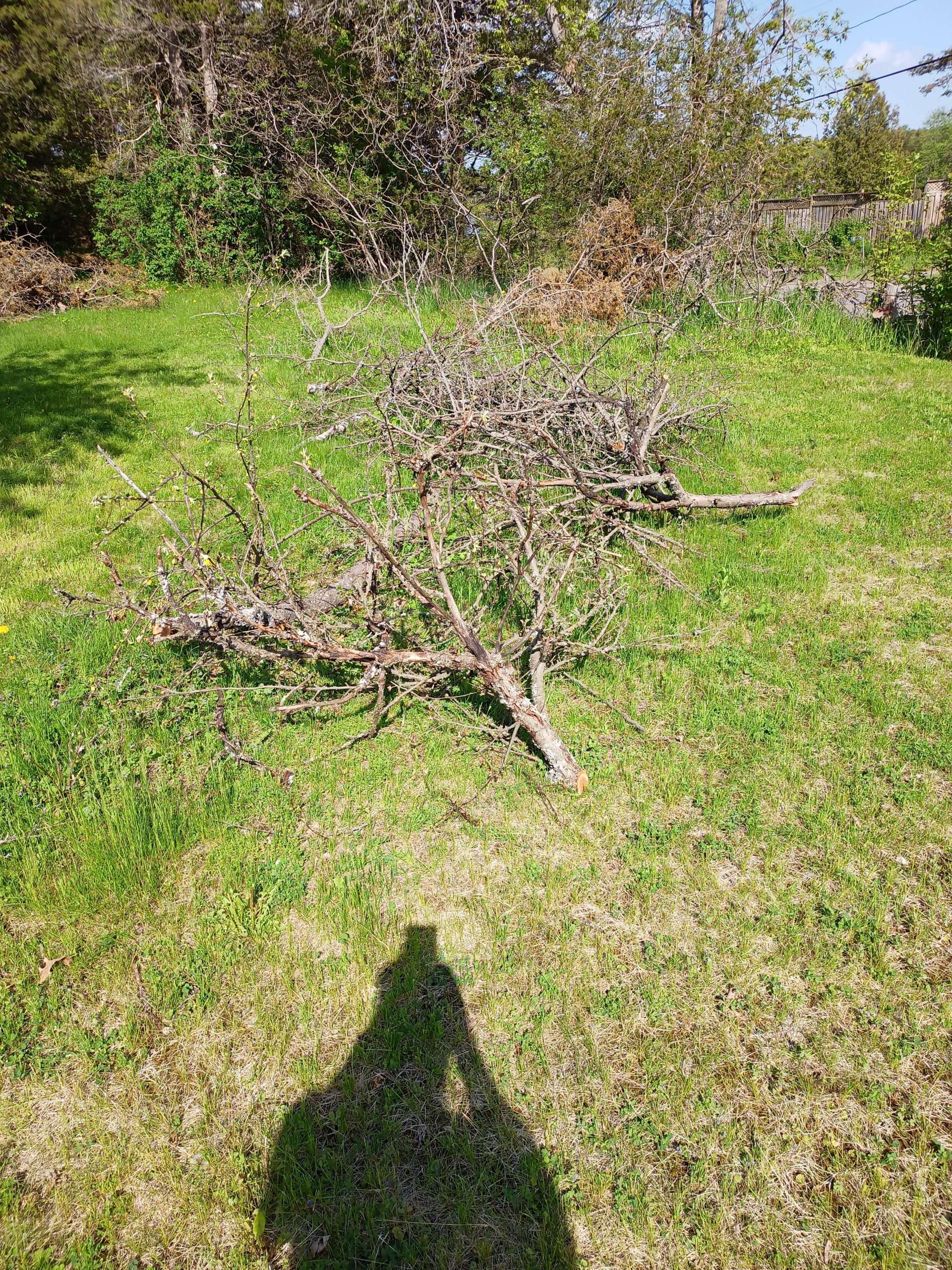
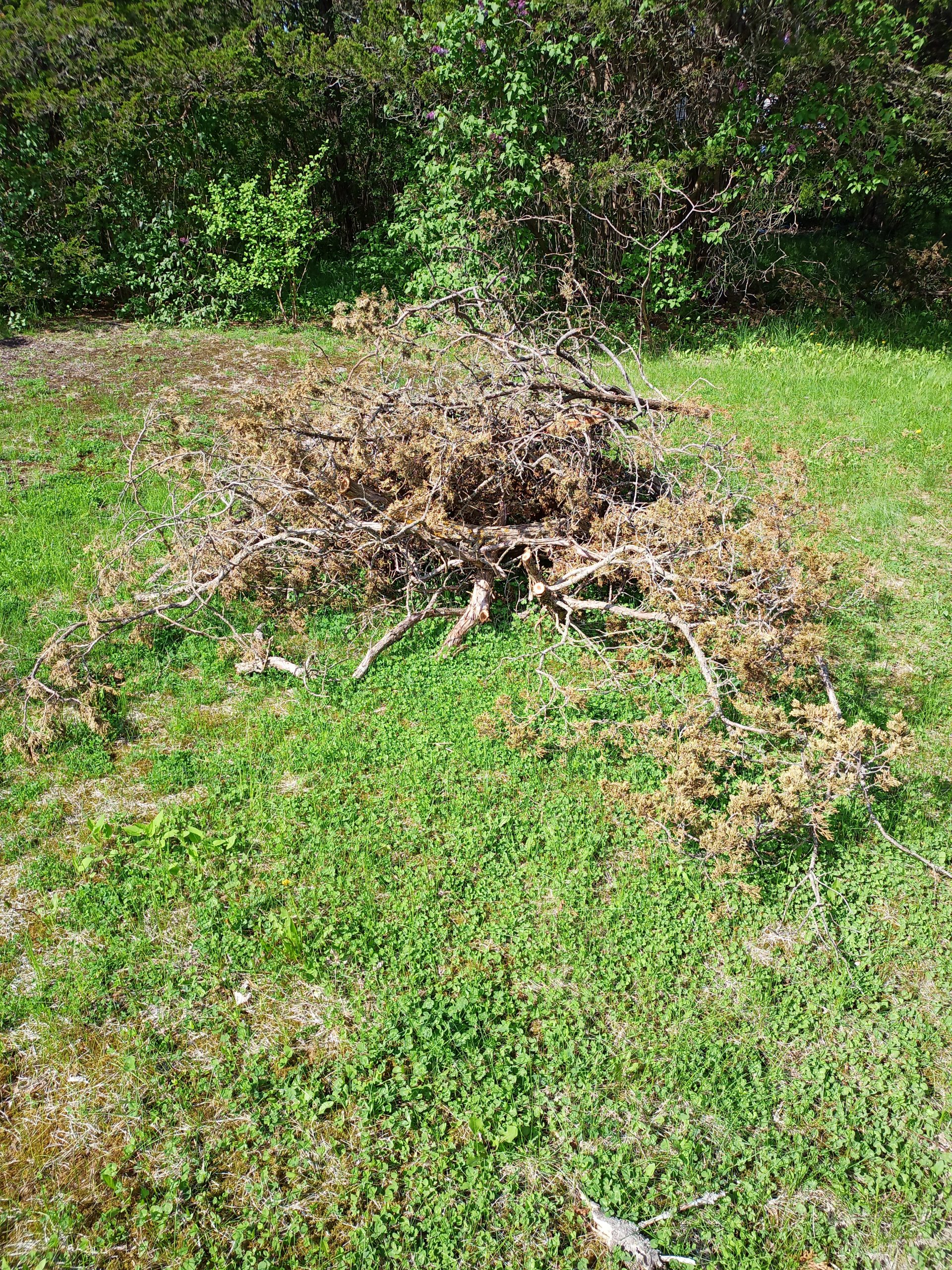
Two days later and we’ve got about ten piles of stuff broken down into pieces that are small enough to move.
Part of an apple tree downed by the storm, cut up.
Branches of a cedar tree
The plan is to break down much of this wood for use as kindling. We’re going to have a lot of it when we’re done, so it made sense to get a rack for that purpose, and here’s where we get into politics. We found a supplier of “outdoor stuff” and a rack that looked like it would meet our requirements. I placed the order. The next day we got a tracking number and a “guaranteed” delivery date. This highlights one of my common complaints about online stores: as soon as a shipping label is generated, the order goes into “shipped” status, but really it can take days before the order is actually prepared and shipped. Take the tracking number over to the shipping company’s website, and you get “we don’t have that package yet”.
But carriers aren’t perfect either. When the package didn’t show up and the carrier still didn’t have any information the day after the promised delivery date, I reached out to the vendor. As it turns out, the item was out of stock and I got a refund and profuse apologies. But I still need a rack, so I went to Plan B, returned to their site and discovered that almost everything they sell is now out of stock. Now why would that be? Because everything they sell is made in China and this company probably brought product into the US first, then shipped it up to their Canadian warehouse, and thanks to the current administration, China isn’t shipping anything to the US. My hope is that we’ll soon see the US cut out of this process, with direct shipments to Canada, but like anything else, that’s going to take some time.
On to plan C, where we find a supplier who still has stock and get some kindling racks on order. This is successful.
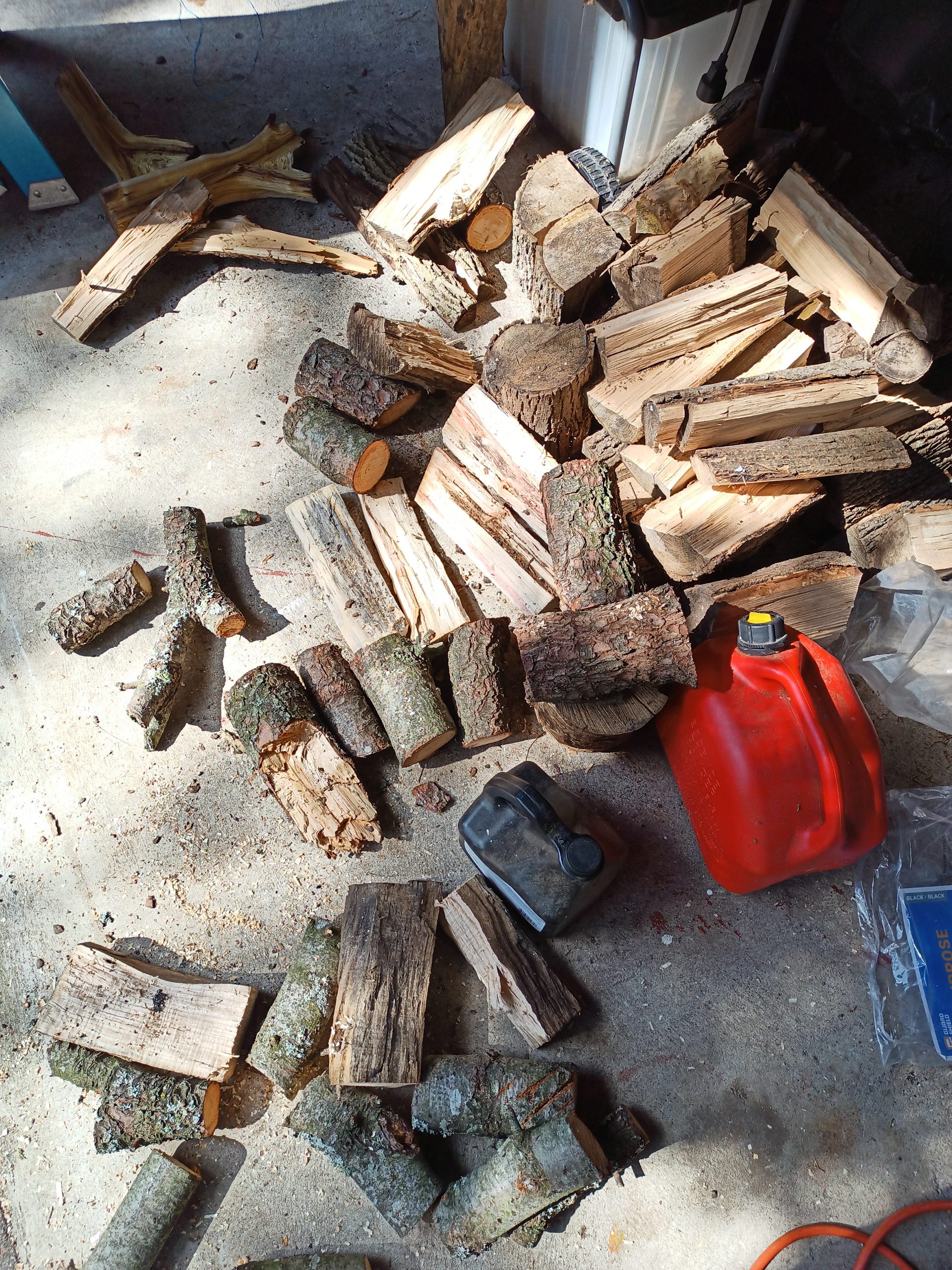
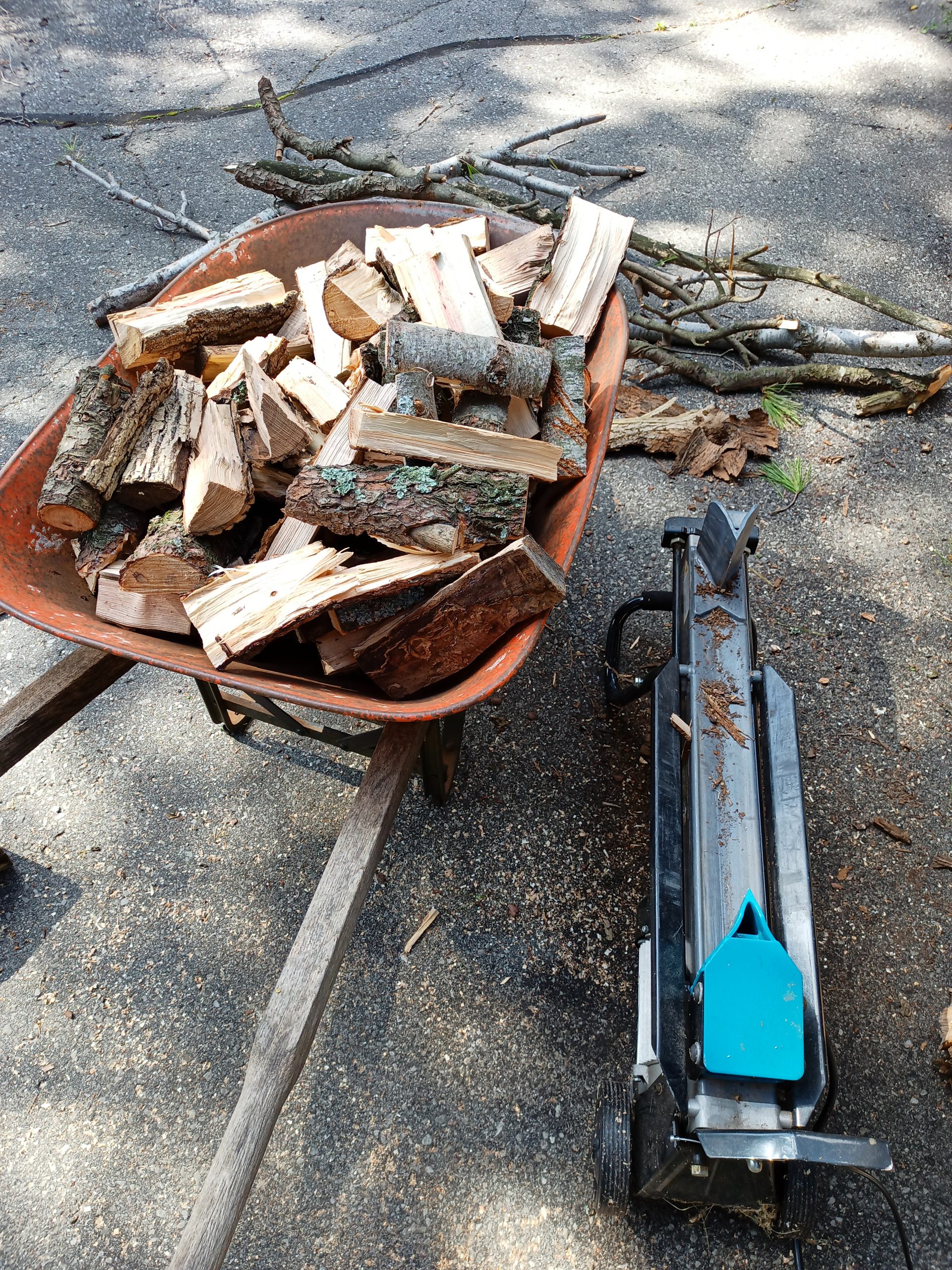
After hauling all suitably-sized branches up to the garage, I put the chainsaw and a log splitter to use to cut everything up into kindling-sized pieces.
Wood for kindling, some split, some not.
[That gas tank was to get a gas-powered generator running when the power was out. Naturally it wouldn’t start. Internal combustion engines suck.]
Split wood, ready to move
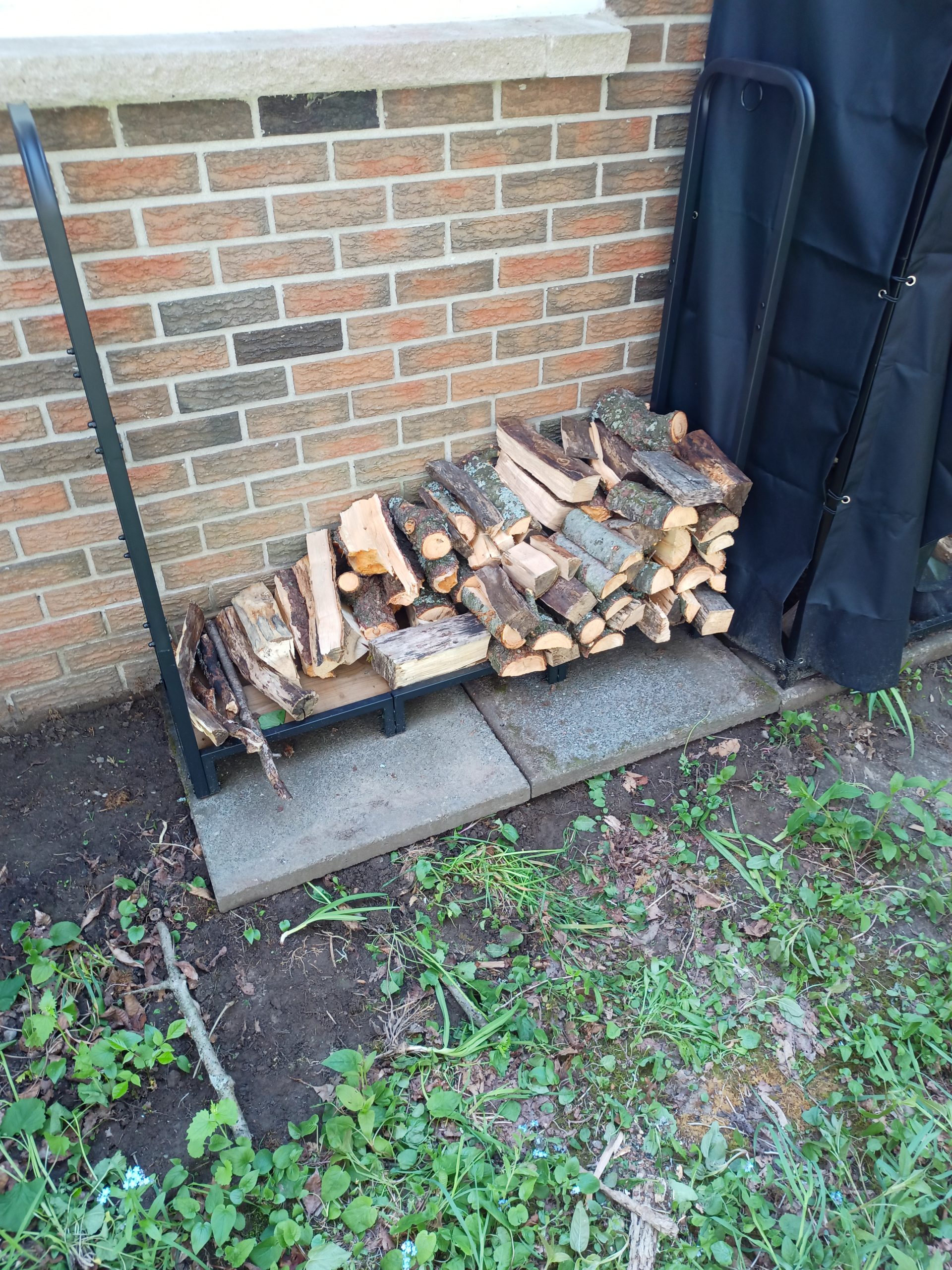
And finally I stacked them in our new “Plan C” rack:
Kindling on a rack.
By the time we’re done, I expect that rack to be filled to capacity, and we have a second one just like this one that we’ll use for smaller pieces.
Then we’ll be ready for Step Four, which will be call in the professionals to handle that Mulberry tree and several others. In turn that will require another round of long splitting and kindling-making. By the time fall arrives, we might even have the whole mess cleaned up!
I’m going to start this one with a disclaimer: much like the folks who write for Rebel Media, I’m not a journalist. I’m reacting to a single social media post and the full story might be completely different. In part what I’m hoping to accomplish here is to inspire an actual journalist with more skills and resources to delve into this, get more facts, and if that story is congruent with what I write here, make as many people as possible aware of it.
Here’s the post:
Sure enough if you head over to Krauss’ Amazon page, her bio mentions the Fatality series, and that series doesn’t show. Links to the series basically come up with a 404. Next let’s head on over to the publisher of the series Dream’s Edge Publishing (and ignore that it’s a god-awful Wix site). Every work on that site links to Amazon (US, CA, and UK) and they’re all just as dead.
I suppose there could be some other reasons for this. Amazon is chock full of byzantine rules, bogus DMCA claims, and a notable inability to connect to an actual person to resolve issues. But in light of the current political environment in the US, and Amazon’s dependence on AWS contracts with the US Government, it sure bears more investigation.
No matter what the reason, this event brings home the peril of relying on Amazon’s market domination to run a publishing business. Yes, it’s a ton of extra work to make sure your books are available on the dozens of other platforms out there, all for maybe 30% of the market. But at least get onto Kobo and do direct e-book sales or you could find yourself dead in the water in an instant.
Update:
Krauss has received an update from Dreamer’s Edge:
Dear Vanessa,
We have had some bad news about publishing on Amazon and they have terminated our KDP account because of “attempting to manipulate sales.” We have contacted them to protest and ask for further information and how we can best appeal this decision. They have now replied but not given any further information and stated “After reviewing your response, we have reevaluated your account and are upholding our previous decision to terminate your account and remove your books from sale on Amazon” This has been a shock to us, if we do continue to persevere with legal action to get our account reinstated this may take some time and even then, there is no guarantee Amazon will change their decision.
Therefore, we are giving you back the publishing rights forthwith, of all your work.
Take this message as a legal right of transfer of publishing rights back to you the copyright holder.
It appears that Dreamer’s Edge has tripped over one of those byzantine rules where some algorithm has flagged the account. I’ve experienced an issue like this with one of the other behemoths in the web space, and the only thing that saved my butt is that I was actively advertising on the platform at the time. It was only when I said I was “saddened by the decision and regrettably had to cancel my ads in response” that the decision got changed from a ban to a warning. At least back then they’d tell you which rule you tripped over. Now it’s just “you broke it, bye forever.”
I suspect that Dreamer’s Edge assessment that legal action might be unsuccessful is correct. There’s no harm in sending a lawyer’s letter by registered mail, possibly going so far as Small Claims Court, but in all probability they’re dead in the water. Kudos to them for doing the right thing in this circumstance and returning the publishing rights.
This month for the April 2025 slightly scary dumb password report filters “Log In”, which has been reported as the most popular password in all previous reports. Looking at the raw data, it appears to have been included erroneously. Despite that, the number of attempts is up from last month’s 4,951 to 5,375 attempts with 540 unique passwords.
I’ve replaced my login user names with {username}, and names of the site with {site}, old compromised passwords with {compromised} and malware with {malware}. There were also a large number of seemingly random hex strings logged on one site. They’re pretty boring so I’ve collected those as one entry. If you think your username followed by a special character and a year is a secure password, you might be in for a shock. Actually, your user/site name followed by anything is a really bad idea.
These are failed password attempts across my WordPress websites. None of my sites are particularly popular. The amount of real traffic they get is small. So if you have a site and think hackers are ignoring it because few would care, think again. Every site on the net gets attacked like this. Every single one, including yours!

![Vanessa Krauss on Mastodon. Post content: "So not only did my first LGBT series got[sic] banned from Amazon along with the entire press who helped me get published, and few people care. Heck, I wouldn't be surprised if someone was rejoicing this. I know I'm not well liked...but the entire press fell to Bezos. "We have LGBT, neurodivergent, and disabled authors mostly...this hurts."](https://ambitonline.com/wp-content/uploads/2025/05/Strauss.jpg)
Recent Comments