
A few weeks back, we got hit with a heavy ice storm, and the damage to our grounds was pretty extensive. Our house, garage, gardens, and fences were spared, although there were a few close calls. We’re waiting for our “tree guys”, Saunders Tree Service, to take care of customers with more urgent damage before they come in and clean up “the big stuff”. Meanwhile I’m waiting on an electric chainsaw from Ego to arrive. I’ve got all the safety gear, I just need something a little more capable than the bow saw I usually use for branches and small trees. Sawing is a great workout, but if I were to stick with a manual approach I’d be at it until the fall, at least.
Meanwhile, we’ve got firewood-length logs hanging about, the result of taking out some dead Ash trees and so-called Manitoba Maples in previous years.
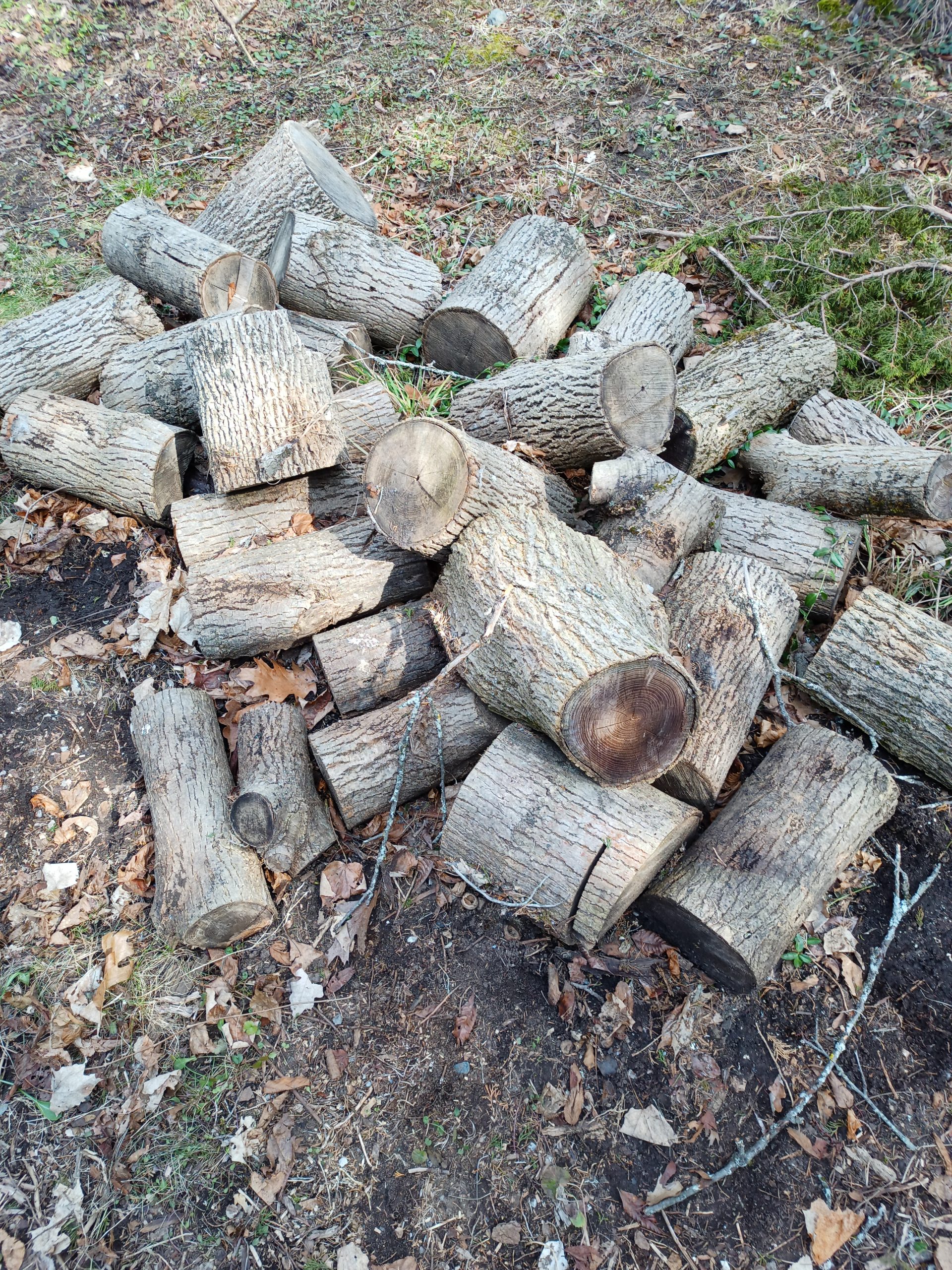
About 1/4 of the logs left to split
We’ve got an electric “5 ton” log splitter, but it’s just not up to this job. It’s time to dust off the traditional tools, namely a splitting axe and a sledgehammer. Splitting wood makes sawing branches seem like a jog in the park. It’s tough work. Bashing away at these logs brought back memories of being a child, going to Christmas dinner at my step-grandfather’s place. In hindsight, I realize that “Old Man Wood” as he was known (then in his 90’s so the moniker was well-earned) ran an estate that was the closest thing to a Lord’s manor that we’ve ever seen in Canada. The main house had something like 17 bedrooms in a wing that was never used and not in the best repair. A dance hall with four organs, one in each corner (also not in great repair, only two still worked), two greenhouses, two dining rooms, with a partition between them that would get opened for big holiday dinners, and two parlours, one with a grand piano. The kitchen featured an ancient wood stove, possibly two. The estate had three houses for “the families”, which I just now realized were probably much like the farmers in Downton Abbey, despite this being the 1960’s! Last time I dropped in, curious to see how it had fared, his descendants had fixed the place up and were running it as a B&B.
What reminded me of dinners there was the memory of the young farm hands in a woodshed attached to the kitchen, splitting logs to feed the stove that would in turn cook a feast for about 30 people. My recent efforts at splitting logs made it clear why it was a job given to those with younger, stronger bodies. My current capacity for a session of log splitting is merely one dolly load.
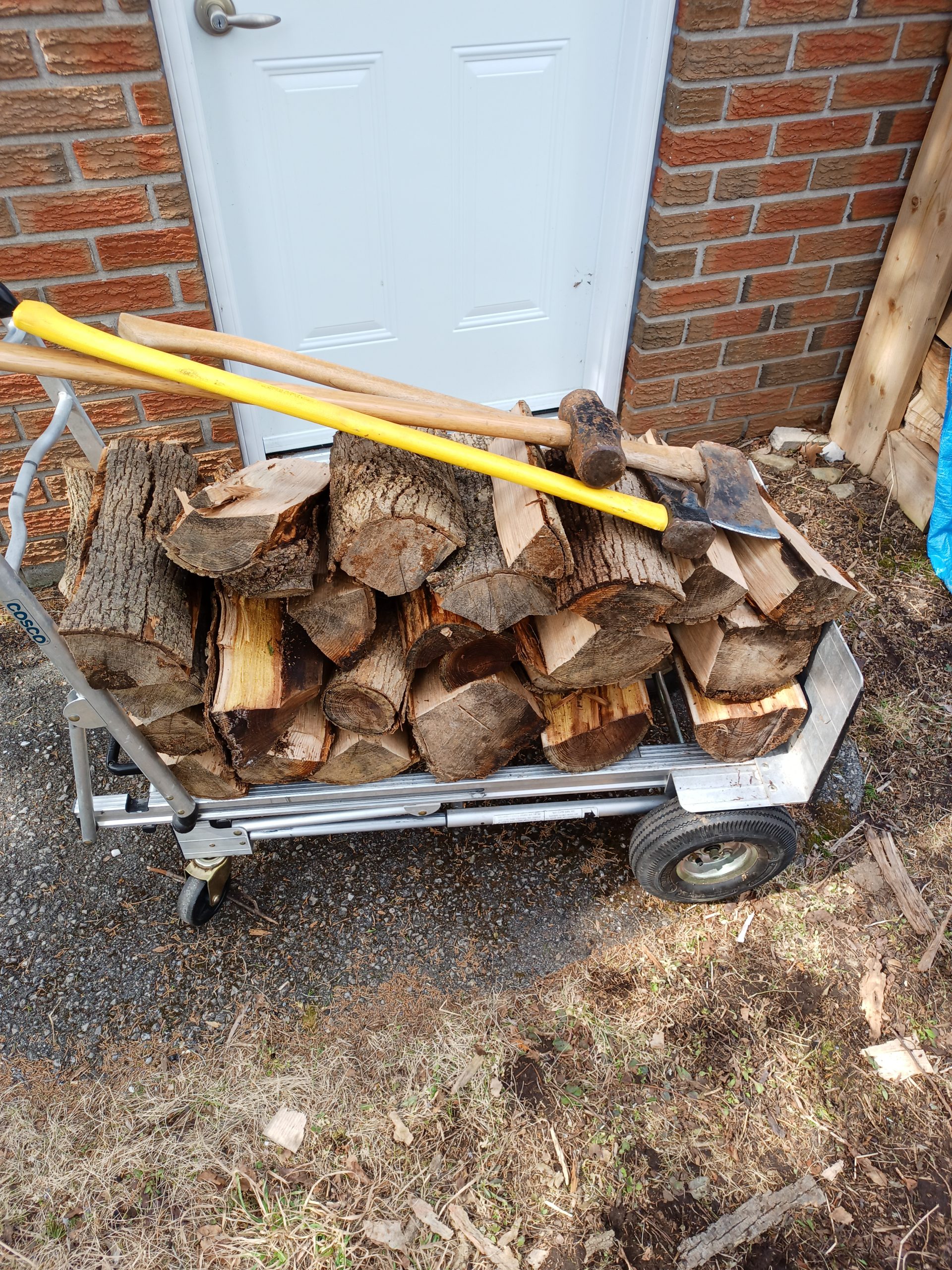
Just a little less wood than I can manage to split in one session.
This particular load is a little less than I could manage on a day dedicated to splitting. It’s a little less because we also need a place to store the wood. Thus the first part of the day was turning a box full of parts into this storage rack:
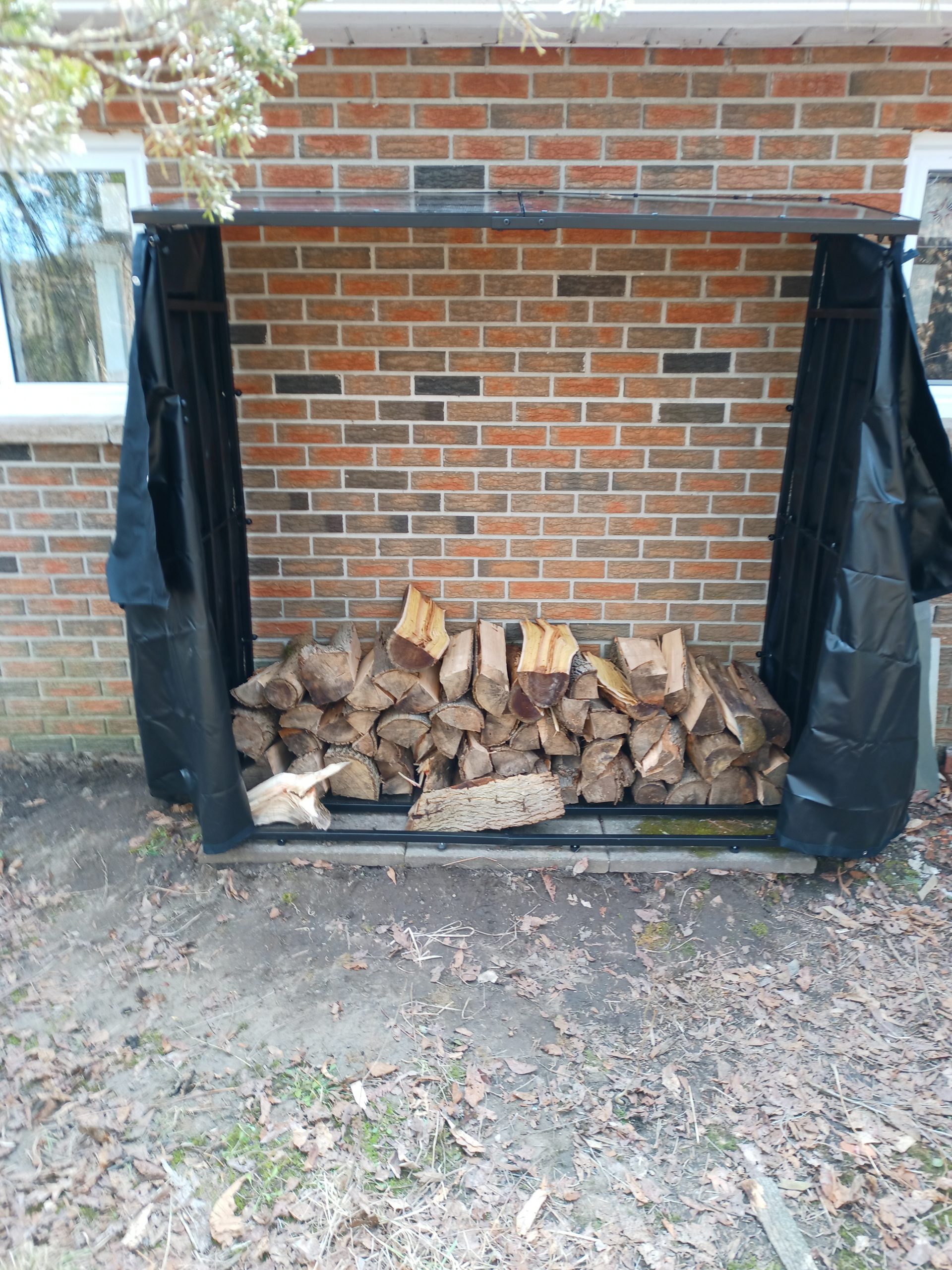
A newly assembled firewood storage rack.
The assembly instructions for this thing score about 3.5 on the accuracy and readability scale (for a reference IKEA instructions tend to score an 8). Notably, the absence of some detail for parts orientation led to a little disassembly and reassembly. In one case the wrong bolt was specified, but thankfully the kit supplied the correct amount. They could have also changed the order of assembly and both avoided the ambiguity that led to work done twice, as well as eased assembly (I often use my height and very long arms to successfully ignore “needs two people to assemble” instructions, a slight change in order would have made the process even easier).
The image above shows the results of two days splitting wood, although the first day also involved excavating the space for the rack and dropping in some old and very heavy patio tiles, and the second assembling the rack. I may be ambitious here, but I’ll be aiming for two dolly loads per day. If I can manage that, this rack should be nearly full in about four or five days.
The latest update on the chainsaw is either Thursday this week or the week after, and we have another smaller rack on the way that will be dedicated to kindling-sized wood. That’s step two, and I expect we’ll have enough kindling to last more than a year, maybe two if we ration it.
At some point, cleanup steps will become sufficiently mixed with ongoing maintenance and peripheral storm-related damage that the distinction will be lost, but that seems a long way off at the moment.
Recent Comments